From the moment you arrive and settle in at your desk, to the moment you shut your laptop for the day, your work doesn’t happen in one continuous mode. Over the course of a business day, you may shift from solitary deep thinking to moments of shared collaboration, and from monotonous data entry to a scorched-earth assault on your desktop clutter. Much like the ebb and flow of effort we bring to each task, our bodies also have different physiological demands that support our work, and lighting plays a big role.
Exposure to light, whether natural or artificial, can help people transition throughout the day by keeping them comfortable, engaged, and productive. Follow along on a hypothetical day at the office to learn how.
Morning Focus and Set-Up
The opening shift at the office is all about easing into the day with clarity and control. Mornings are often quieter and digital-first. People check messages, plan the day, and settle into focused individual work. Access to natural light and adjustable task lighting helps reduce glare, support visual clarity, and ease people into focus without strain.
Tip: Balanced, cooler light (5000-6000K) supports alertness early in the day, especially when paired with personal control.
Mid-Morning Collaboration

As the day picks up, work becomes more social, and we begin to seek energy, connection, and shared momentum. Team check-ins, brainstorming, and video calls can benefit from lighting that keeps people engaged and comfortable.
Brighter ambient (overhead) light and daylight help maintain energy efficiency, while layered lighting (from multiple sources) helps avoid harsh contrasts on screens and faces.
Tip: Natural, or cooler-toned light supports engagement and collaboration.
A Change of Scenery
Sometimes, productivity requires stepping away from the desk and shifting to a new space to help us think differently. Moving to a lounge, café, or shared space can support writing, thinking, or working through ideas. Lighting in these spaces should feel comfortable and inviting, supporting focus without the intensity of task-driven environments.
Lounge areas outfitted with ample windows create an ideal escape. Its softer ambient lighting helps reduce visual fatigue and supports creative thinking and reflection.
Tip: Softer, ambient lighting (such as daylight) helps reduce visual fatigue and supports creative thinking and reflection.
Midday Reset

Lunch time is a chance to step away and reap the benefits of nourishment, movement, and some mental breathing room. Grabbing lunch with co-workers, taking a walk, or handling a personal moment gives the mind and the eyes a well-deserved break.
At a biological level, morning and midday exposure to daylight helps regulate our circadian rhythm, supporting alertness now and better sleep later. Softer lighting and access to daylight also help reduce visual fatigue and support recovery before the afternoon stretch.
Tip: Morning and midday exposure to daylight helps regulate the internal clock, supporting alertness now and better sleep later.
Shared Focus
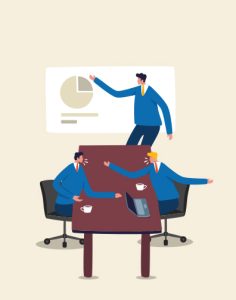
Conference room meetings can ask a lot of people. Staying engaged, reading faces, viewing screens, and making decisions together all depend on visual comfort. Lighting in conference rooms works best when no single source dominates. When ambient and focused light work together, glare is reduced, visual fatigue is minimized, and shared attention lasts longer. Light should feel even across the room, with clear faces and screens that are comfortable to view from any seat.
Rather than drawing attention to itself, lighting supports the flow of conversation, adjusting quietly to the room, the time of day, and how the meeting unfolds.
Late-Day Wind-Down
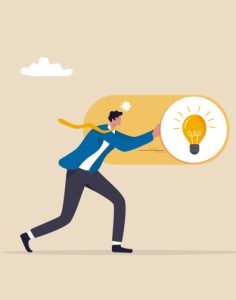
With most deep-thinking reserves gone, this is often a great time to catch up on emails, wrap up the day, and set tomorrow up for success. Warmer light and a softer intensity signal the transition, supporting comfort, reducing eye strain, and making it easier to transition into life outside the office, setting you up for a relaxing evening ahead.
Tip: Warm-toned light (2000K-3000K) supports visual comfort and cues the body that the day is winding down.
The Happiest Hour

As you pack up, power down, and head out, there’s still room to leave the office well, for yourself and the planet. Lighting that automatically dims or turns off when spaces are empty reduces energy use without requiring a second thought. It’s a small moment that reflects a larger idea. Workspaces should support people while they are there and be responsible when they are not.
Tip: Occupancy sensors and automated controls help reduce energy use while maintaining comfort throughout the day.
Design for the Full Day
At LightCorp, we believe that lighting should support people, not just tasks. The best workspaces respond to how people actually move through their day, with thoughtful lighting that adapts quietly to support focus, collaboration, rest, and transition from your first cuppa to happy hour.
Curious to learn more? Connect with our team at insidesales@lightcorp.com or visit our website at lightcorp.com.