
Workspaces have shifted away from rows of identical stationary cubicles toward fluid environments filled with focus pods, collaboration lounges, and meeting zones. Unfortunately, many standard overhead lighting plans have not evolved to efficiently serve these varied layouts. Blanket ceiling grids tend to be too bright, which can cause visual discomfort for employees and make the office interior look flat.
Breaking out of rigid, one-size-fits-all illumination requires a shift toward agile, furniture-integrated solutions. To support these dynamic environments, office lighting fixtures must evolve along with the furniture. In this article, we look at how specifying adaptable, localized illumination enables design professionals to build highly functional spaces that protect client budgets and accommodate future layout changes.
Standard Overhead Lighting Can’t Support Multi-Zone Floor Plans
For decades, standard overhead lighting fixtures have been the default choice for commercial office spaces. They are popular because they provide predictable, uniform illumination throughout a room. This blanket approach works perfectly for fixed, repetitive desk layouts where employees require identical working conditions.
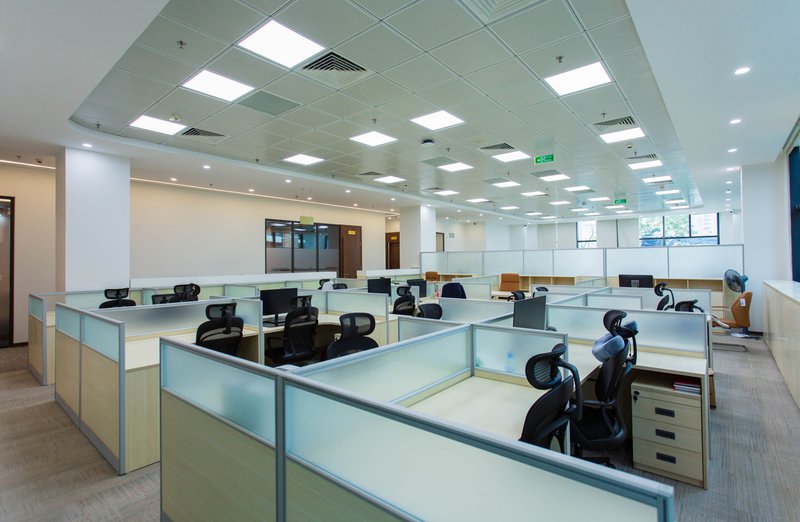
However, today's versatile workspaces require specific lighting conditions for different tasks. A single floor plan now contains distinct zones that demand unique visual environments, making uniform ceiling grids impractical:
- Collaborative lounges with digital screens need dimmed ambient levels to prevent screen glare.
- Quiet focus pods require soft, glare-free illumination to reduce eye strain during deep work.
- Meeting zones need crisp, clear visibility that brings depth and dimension to group discussions.
To support these diverse areas, adaptable office lighting fixtures should be considered to ensure every zone receives the precise illumination its specific purpose demands.
Lighting Options Directly Impact Daily Productivity
When employees are forced to work under the same level of brightness, their focus suffers. Individual lighting preferences vary wildly based on age, vision, and the specific task at hand. Giving professionals the ability to adjust their immediate environment directly counteracts the friction of a rigid workspace.
Providing personal control over office lighting fixtures enhances the daily workflow in several measurable ways:
- Adjustable task lights let users eliminate glare on screens. This prevents eye fatigue and headaches that can derail afternoon focus.
- Brighter, crisper light can boost alertness during morning collaborative sessions. Meanwhile, softer lighting helps teams wind down and focus later in the day.
- Detail-oriented work such as proofreading contracts requires higher foot-candles than scanning a digital dashboard, making adjustable desk options essential.
A supportive workspace must accommodate the human element of a business. It is helpful to understand how task lighting for hybrid environments allows teams to maintain high performance regardless of where they sit. When design professionals specify personal lighting choices, they provide critical tools that directly affect employee energy and output.
Movable Office Lighting Fixtures Prevent Future Renovation Costs
Office layouts are rarely permanent, as companies regularly reconfigure furniture to accommodate new teams and changing work styles. When a business relies entirely on a fixed lighting infrastructure, altering the floor plan triggers immediate logistical friction. Even a simple furniture shift can leave desks poorly lit because they are no longer aligned with the immovable ceiling grid.
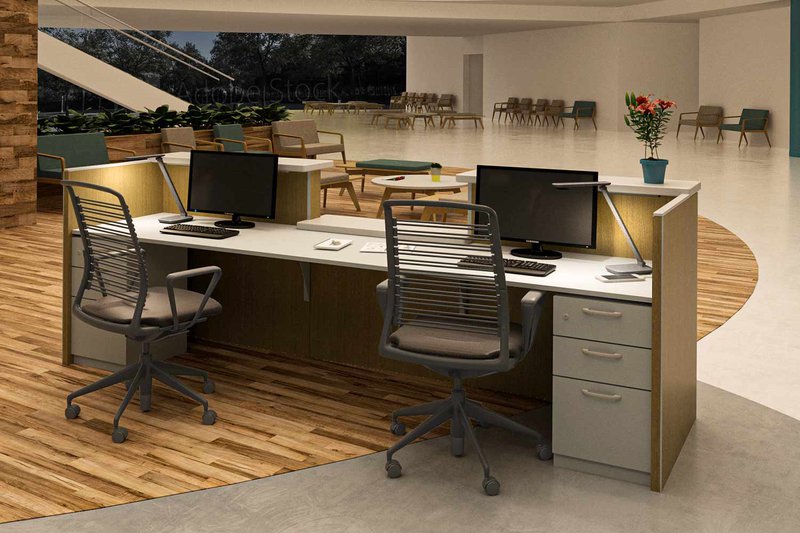
Specifying movable office lighting fixtures eliminates the need for expensive electrical adjustments by shifting illumination from the building structure to the furniture itself. This proactive design strategy protects the client budget in several key areas:
- When desks or partition walls move, integrated task lights and linear fixtures can follow, plugging directly into existing power tracks.
- Traditional ceiling renovations force companies to close entire sections of the floor for days, whereas moving furniture-integrated lighting takes hours.
- Clients save thousands of dollars by avoiding specialized electrical contracting fees every time a department expands or changes its workflow.
A truly functional workspace must adapt smoothly to a business's daily needs. By selecting movable lighting solutions, interior designers and dealers give their clients an agile asset that accommodates floor plan updates. This ensures the workspace remains functional and cost-effective long after the initial move-in date.
Project Timelines Demand Flexible, Spec-Ready Solutions
Commercial design projects operate on aggressive, compressed schedules, leaving very little room for manufacturing delays. Dealers and account executives constantly manage tight lead times while trying to meet high client expectations. If a specified fixture order is delayed, it can push back the move-in date.
To meet these tight deadlines without compromising on style, the best approach is to find made-to-order lighting that aligns with specific project needs. Partnering with a domestic manufacturer that offers this level of agility keeps project timelines secure through several advantages:
- Frictionless Specification. Quick access to clear, comprehensive product specs allows designers to finalize drawings and secure client approvals without delay.
- Made-to-Order Flexibility. Sourcing fixtures that can be tailored to both high and low-volume orders ensures a perfect fit for any unique workspace layout.
- Guaranteed Sourcing Speed. Working with an agile domestic supplier eliminates the risk of unpredictable supply chain bottlenecks or long transit delays.
When project deadlines are tight, manufacturing agility becomes just as critical as the design itself. Selecting spec-ready, highly responsive solutions ensures that the procurement process stays entirely on track. This approach protects the project schedule, allowing teams to deliver exceptional spaces without the friction of unpredictable shipping delays.
Partner with a Reliable Provider of Office Lighting Fixtures
Creating dynamic lighting for offices requires a manufacturing partner that understands design agility and tight commercial schedules. LightCorp streamlines this process by delivering premium, made-to-order office lighting fixtures with a dependable 10-day lead time. Proudly built in Grand Haven, Michigan, our solutions combine performance and flexibility to support multi-zone layouts and protect client budgets.
Contact LightCorp today to explore our lighting solutions and optimize the next commercial project specification.