
Integrating plantscapes into a workspace benefits employee focus and reduces stress. Despite these advantages, many designers still treat greenery as a minor decorative afterthought, added after floor plans are finalized. Waiting until after move-in to select office planters can often lead to missed opportunities for structural innovation and functional layout integration.
This delay creates major pitfalls such as obstructed pathways and poor light access for real plants. When uncoordinated, these additions clutter the workspace. In this article, we’ll explore how to leverage greenery as a core design element to define zones, guide wayfinding, and soften technical environments.
Form Meets Function: Defining Spaces with Office Planters
Traditional floor plans often rely on permanent walls or heavy partitions to separate departments, which can limit layout flexibility. Incorporating biophilic design through movable greenery allows designers to create distinct zones without committing to rigid construction. Using office planters as boundaries provides a visual cue for privacy while maintaining the feel of an open environment.
To effectively define a layout with functional assets, consider these strategic implementation tips:
- Layer Heights for Visual Privacy. Use taller foliage in high-traffic corridors to shield workstations from distractions without completely closing off the room.
- Create Temporary Project Hubs. Opt for planters with casters to instantly separate a temporary collaborative group area from permanent desks.
- Define Entrance Thresholds. Use a series of low-profile units to signal the transition from a public elevator lobby to a private, branded suite without installing heavy doors.
This approach ensures that office planters function as intentional structural elements rather than scattered accessories. By treating them as part of the spatial strategy to create agile workspaces, designers can quickly pivot layouts to support different work styles.
Sculpting the Layout: Using Office Planters as Wayfinding Tools
Without clear visual boundaries, open floor plans can make walkways and quiet workspaces difficult to distinguish. Relying on overhead signage can clutter an otherwise sophisticated aesthetic. By using office planters as organic landmarks, designers can subtly define traffic throughout the space.
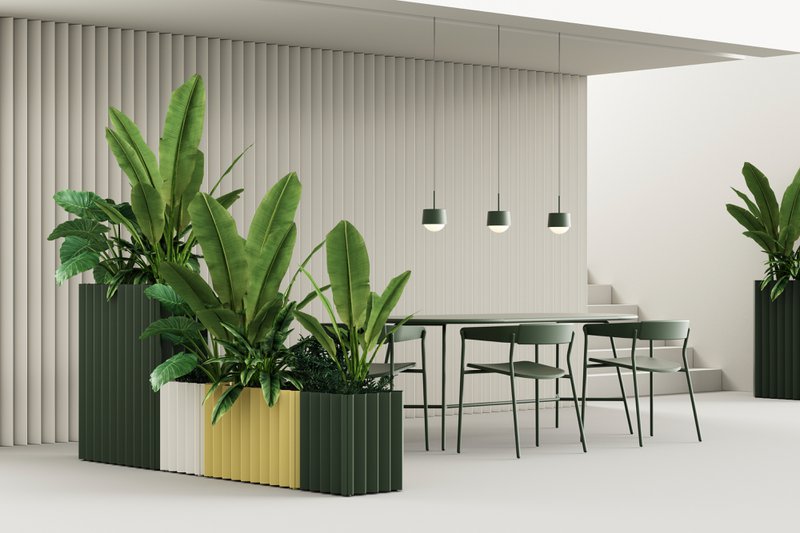
To create an intuitive flow using these structural elements, designers can implement several precise wayfinding techniques:
- Define Path Thresholds. Arrange linear office planters along main walkways to guide foot traffic while shielding nearby touchdown stations from heavy corridor movement.
- Signal Spatial Intersections. Place distinct office planters at layout pivot points to indicate a transition from main walkways to quiet departmental areas.
- Soften Dead-End Hallways. Station larger plants at the end of a long corridor to make the space visually interesting.
This strategic placement ensures that indoor plantscapes will do more than serve as mere decorations within the floor plan. They become an active part of the structural vocabulary, providing subtle navigation cues that make a workplace feel cohesive and effortless to navigate.
Balancing Tech-Heavy Environments: Using Office Planters to Contrast Hard Surfaces
Today’s workplace is typically composed of high-performance materials such as brushed-metal monitor arms, glass privacy screens, and laminate work surfaces. While these components are essential for the demands of the digital age, these hard, reflective surfaces can make a floor plate feel sterile and uninviting. Incorporating office planters allows designers to rejuvenate the workspace by introducing organic textures that contrast and balance these industrial finishes.
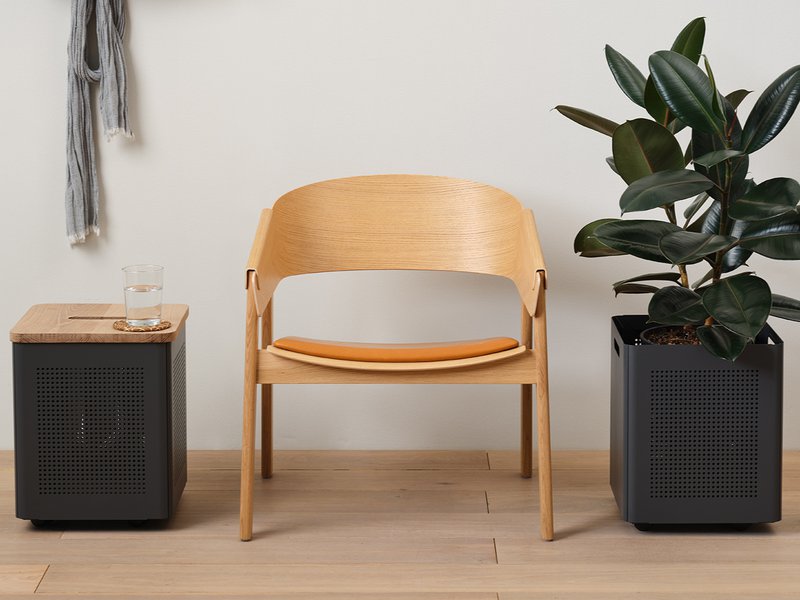
To create a more harmonious environment alongside necessary workplace technology, consider these strategic tips:
- Define End-of-Run Anchor Points. Position freestanding office planters at the ends of long, metal-framed benching rows to break up repetitive desk lines.
- Interrupt Reflective Sightlines. Position larger office planters as standalone islands between high-density workstations and glass conference walls to provide a visual break that reduces glare.
- Designate Analog Reset Zones. Station a cluster of office planters near seating areas intended for face-to-face brainstorming to signal a shift away from high-density digital zones.
- Layer Textures for Visual Comfort. Combine the clean, powder-coated finishes of planters from our Most Modest brand with varying leaf structures to create a more diverse and comfortable sensory experience.
This deliberate layering ensures the workspace remains professional and tech-ready without feeling industrial. By integrating office planters as a counterpoint to technical furniture, designers build a more balanced environment that supports both equipment and people.
Design Greener Workspaces
Incorporating more greenery into workspace design can be challenging without the right structural elements. Still, the benefits are worth the extra effort. Here are a few of the most cited advantages of incorporating plants in the workplace:
- Sharper focus, more creative output. Greener workspaces have been linked to improved cognitive performance, stronger memory and recall, and higher creative output compared to plant-free spaces. Studies have found that employees in greener buildings report about 30% fewer issues, such as headaches, fatigue, and other common workplace discomforts.
- Lower stress, faster recovery. Exposure to plants has been linked to measurable drops in heart rate and quicker mental recovery after demanding tasks.
- Cleaner air, fewer sick days. Indoor plants reduce airborne pollutants and CO2 levels, which has been associated with better breathing, fewer sick days, and sharper alertness.
- Higher productivity. Field studies have found that adding plants to lean workspaces can meaningfully boost productivity.
- Better workspace satisfaction. Employees in greener offices tend to report higher workspace attractiveness and fewer health complaints.
The right planters make it easier to bring these benefits into a layout without sacrificing performance.
At LightCorp, we offer a selection of office planters from Most Modest™. With these, designers can deliver biophilic benefits without compromising on-site performance. These premium office planters and accessories are built proudly in Grand Haven, MI, and ship within a standard 10-day lead time to keep projects on schedule. Contact LightCorp today to specify the collection for an upcoming layout.