Why personalization and control are becoming the workplace benefits employees value most.
Since the modern office debuted in the mid-1960s, workplace design has aimed to help people do their best work.
Over the decades that followed, organizations experimented with office design not only to help people work effectively, but also to attract and retain talent. Approaches ranged from private offices to communal workspaces, while on-site cafés, fitness centers, and wellness areas became increasingly common amenities.
While some workplace amenity trends have lasted longer than others, no single workspace, perk, or office setup has worked universally for everyone or every task.
Today’s best workplaces stand out not simply for the amenities they provide, but for the personalization and control they offer employees. As flexibility becomes an expectation rather than a perk, the most valuable workplace benefit may be the ability to choose how and where to work throughout the day.
Why Choice Matters More Than Ever
Since the dot-com boom in the early 2000s, top corporations have offered enviable perks like free snacks, game rooms, coffee bars, and rooftop lounges to lure the best candidates. Although these facilities may have made offices more memorable and in-demand, they assumed everyone wanted the same things.
Today’s workforce has more varied needs and is less likely to be won over by one-size-fits-all amenities. Employees in a single office may span five generations, bringing different physical and sensory needs, work-style preferences, and technology expectations. That diversity makes choice and adaptability essential elements of workplace design.
The differences in the need for office lighting illustrate this clearly. Because eye structure differs, a 60-year-old needs considerably more illumination than their 25-year-old counterpart to work comfortably. Prescribing a uniform lighting level throughout the office will either under-light or over-light the space for some occupants, affecting their productivity and well-being.
The pandemic accelerated employees’ expectations for choice and control at work. After months of working from home, many people became more aware of the conditions that helped them perform at their best—from where they worked to the temperature and lighting around them. Returning to the office did not erase those preferences; it raised expectations that workplaces would offer similar flexibility.
Nearly seven years after the COVID-era work experiment, offices are still adjusting to hybrid schedules, rapid tech growth, and a shrinking footprint, all of which demand greater adaptability in office design. The aim is no longer to cater to the typical employee (there isn’t one); instead, the emphasis has shifted to supporting a wider range of people, tasks, and work styles.
This shift gives dealers and designers a new opportunity to distinguish themselves when outfitting workspaces. The best workplaces will be recognized not by how many flashy amenities they offer, but by how well they support different ways of working.
What Choice Looks Like in Practice
Designing for choice means giving employees more agency over their office experience throughout the day, including choosing their work location(s) within the office, controlling their sensory and ergonomic comfort, and having a say in how their personal workspace looks and functions.
A Palette of Places
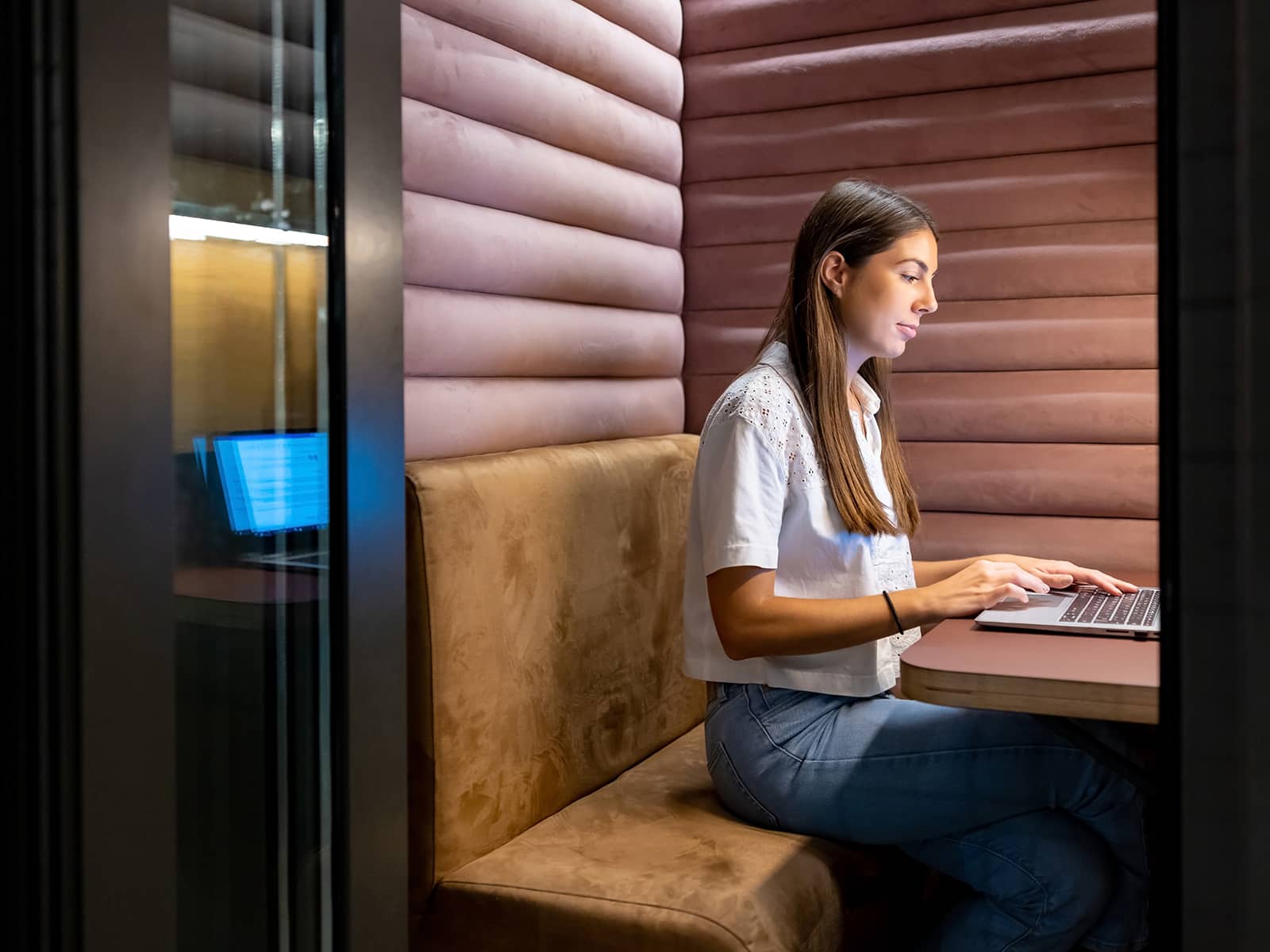
Most office employees no longer work in one place throughout the day. A well-planned workplace offers a range of settings for focused work, collaboration, connection, and restoration. Giving people the ability to choose the setting that fits their task can reduce common barriers such as limited privacy and noise-related distractions, both of which can significantly affect productivity.
One of the best ways to support this freedom is to provide widespread access to power and charging throughout the office. When employees can plug in wherever they choose to work, they won’t have to stop or relocate because their laptop battery is fading or their smartphone is close to empty.
Control Over Comfort
Organizations can also let employees shape their work environment by giving them more control over their sensory and ergonomic comfort. Features such as dimmable lighting, sit-to-stand desks, adjustable task chairs, monitor arms, and other comfort-enhancing tools let people adjust their immediate surroundings to best meet their individual needs.
Comfort is very much a matter of individual preference. Some people work more effectively in brighter surroundings, while others prefer softer light. Some employees are more sensitive to noise, temperature, or visual stimulation, while the activity around them energizes others. Ergonomic needs can vary greatly across age, body type or physical ability, and the kind of work that’s being performed.
Research also shows that employees can be negatively impacted when they lack control. In the Brain Healthy Workplace study by HKS, six out of ten employees said they were dissatisfied with how much control they had over their environment, citing poor acoustics, distractions, and uncomfortable conditions that made it harder to concentrate. The study also found that those with a greater sense of control are more likely to engage in healthier behaviors, experience less distress, and have higher levels of psychological well-being (HKS & Center for Brain Health®, 2023).
Letting employees personalize their work environment for comfort can improve their well-being. Sit-to-stand desks let them vary postures throughout the day, supporting musculoskeletal health. An adjustable monitor arm lets them set the screen at a more comfortable height and distance, reducing overexertion and tension in the eyes and neck. A task light provides extra illumination if needed, without raising the overall lighting level for neighboring coworkers.
Adjustments like these go a long way toward reducing friction for the worker throughout the day. Although these changes may seem minor, together they can help employees stay comfortable, focused, and engaged longer.
Tailoring the Workspace
Providing storage options can also give employees control over their workspace. Some may wish to display family photos and other personal items, while others prefer a cleaner desk with fewer distractions. This is especially important for some neurodivergent employees, who may find clutter and visual stimulation overwhelming and work best in a more organized environment. By offering that flexibility, organizations can support different work styles and help employees create a workspace that feels comfortable, productive, and uniquely theirs.
Self-expression can also strengthen ownership and belonging; when employees can shape their environment, the workplace feels designed around them rather than for them. The goal isn’t to make every workstation completely different or abandon a unified workplace design, but to offer enough flexibility for individuality to exist alongside the organizational identity.
When employees can see their choices reflected in the workplace, the office feels less like a place they have to be and more like where they prefer to work.
Why It Matters for Business
Gensler’s 2025 Global Workplace Survey found a strong relationship between workplace experience and employee outcomes. Among employees who rated their workplace experience as excellent, 86% said the office design enabled them to do their best work; among those who gave their workplace experience a lower rating, that figure fell to 32%. Employees with a good workplace experience were also 1.5 times more likely to say they intended to remain with their company for the next year (Gensler Research Institute, 2025).
Of course, workplace design is only one element of the employee experience, and it doesn’t guarantee better productivity or employee retention. However, it highlights the connection between an environment that supports its staff and the results organizations care about, such as performance, engagement, and talent retention.
Designing with choice in mind isn’t just about making employees happier or more productive; it also helps create workplaces that remain useful long term.
Designers and specifiers can create long-term value for clients by planning flexible workplaces that accommodate change. As teams grow, organizational capabilities evolve, and technology advances, adaptable spaces can be reconfigured rather than replaced. This approach helps keep workplace investments relevant and productive for years to come.
For years, workplace design has pursued the ideal office. The opportunity now is to redefine that ideal around choice. Rather than designing a single environment for an imagined average employee, dealers and designers can provide a range of spaces, furnishings, and tools that support different tasks, comfort preferences, and work styles. As workplace expectations continue to evolve, the ability to offer meaningful choice may become one of the clearest measures of workplace success.
Sources:
Gensler Research Institute. (2025). Global workplace survey 2025. Gensler.
HKS, & Center for Brain Health®. (2023). Creating a brain healthy workplace: Insights report. HKS.