Plus, three more myths that could derail your next lighting plan
When lighting is ideal, it often goes unnoticed, but its impact is felt all day long. Great workspace lighting should flex with us throughout our day to support focused, detail-heavy work as well as the less taxing tasks like planning, reviewing, and responding to emails. It reduces visual fatigue, helps people stay comfortable for longer periods, and makes it easier to transition between tasks.
Lighting isn’t just about visibility; it’s about how we feel, focus, and function throughout the workday. Subtle differences in brightness, placement, and control can mean the difference between sustained energy and creeping fatigue. Despite its impact, lighting is shaped by myths and misconceptions that influence how offices are designed and how we experience our workspaces.
Myth #1: Overhead lighting is enough
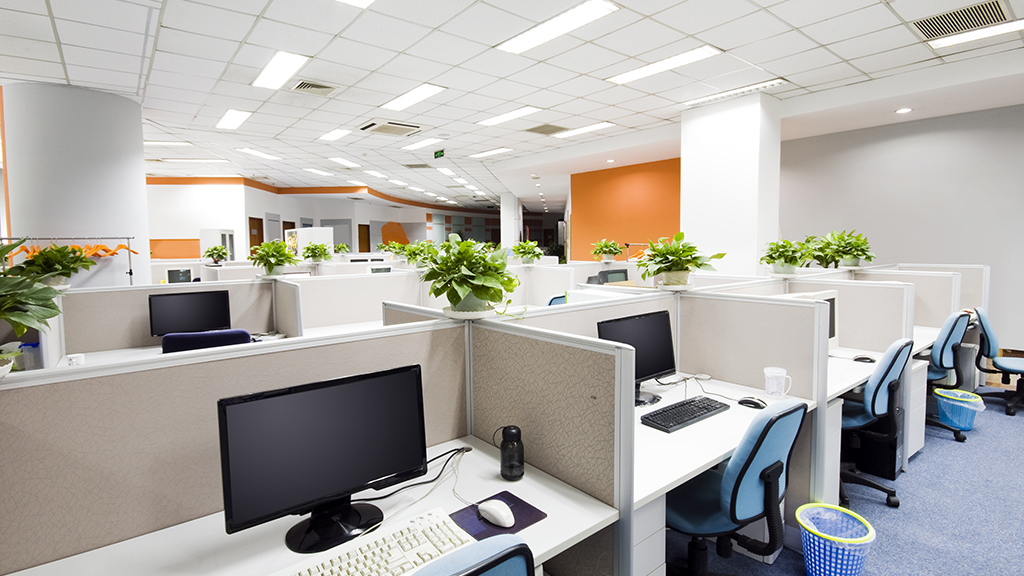
Relying solely on overhead lighting often leaves work surfaces underlit. Many ambient-only offices average around 35 footcandles at the desk surface, which falls on the low end of the 30-50 footcandles recommendation considered by the Illuminating Engineering Society (IES) to be adequate for most people.

But the problem lies in who is considered “most”. Today’s workplace is made up of an average of four generations— a melting pot of near-retirement Baby Boomers to Generation Z, with the emerging Gen Alphas on the near horizon. As you’ll read later, you’ll learn how much visual needs vary widely across these groups, and lighting needs to accommodate those differences. But the bottom line is that a one-size-fits-all approach rarely delivers lasting comfort for anyone.
Myth #2: Brighter is always better
This next myth is an easy one to fall for: that more light is always better. But in today’s workplace, that assumption doesn’t hold up. It made more sense fifteen years ago, when we shifted between paper and screens throughout the day. Now, most work is done on self-lit displays, which fundamentally changes our lighting needs. In addition to being an unnecessary waste of energy, excessive overhead lighting often creates glare and reflections on those screens, forcing eyes to constantly adjust. Over time, that strain can lead to headaches, dry eyes, blurred vision, and fatigue.
Myth #3: One solution fits everyone
Contrary to the adage, not everything gets better with age, including our eyes. As the eye ages, its lens thickens, and pupils shrink, allowing less light to reach the retina. As a result, older workers will require more light for visual tasks than younger individuals.
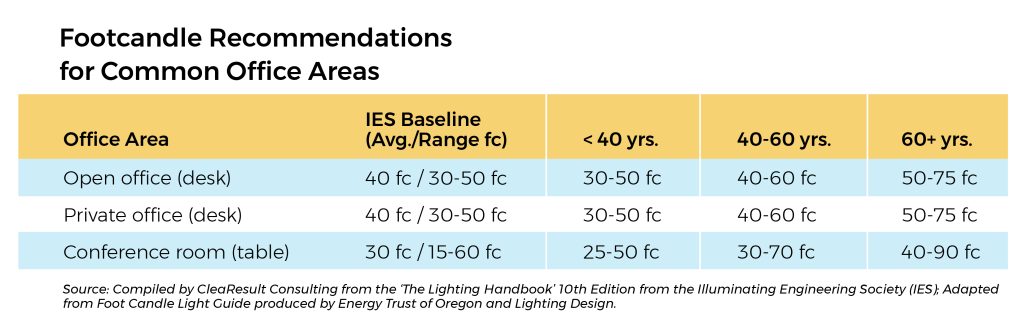
How much more? As a standard, the IES recommends about 30 footcandles to read 10-point type at age 20. By age 50, that recommendation nearly doubles. By age 60, it increases even further. A workspace that feels comfortable to one person may feel dim to another, which is why personal adjustability becomes critical for multi-generational workforces and shared, communal spaces.
Myth #4: Lighting is just a finishing touch
Finally, interior designers have often referred to lighting fixtures as the jewelry of a space, something added near the end of the project for visual appeal. While aesthetics certainly matter, lighting plays a much larger role. It influences how people feel, how long they can stay focused, and how effectively a space actually functions. This mindset of treating lighting as an afterthought often leads to costly fixes later.
Four Core Principles Designers Can Rely On
Enough with focusing on all the wrong— let’s talk about how to do lighting right. To craft a lighting plan that supports both work and well-being, focus on the following people-first principles:
Think in layers
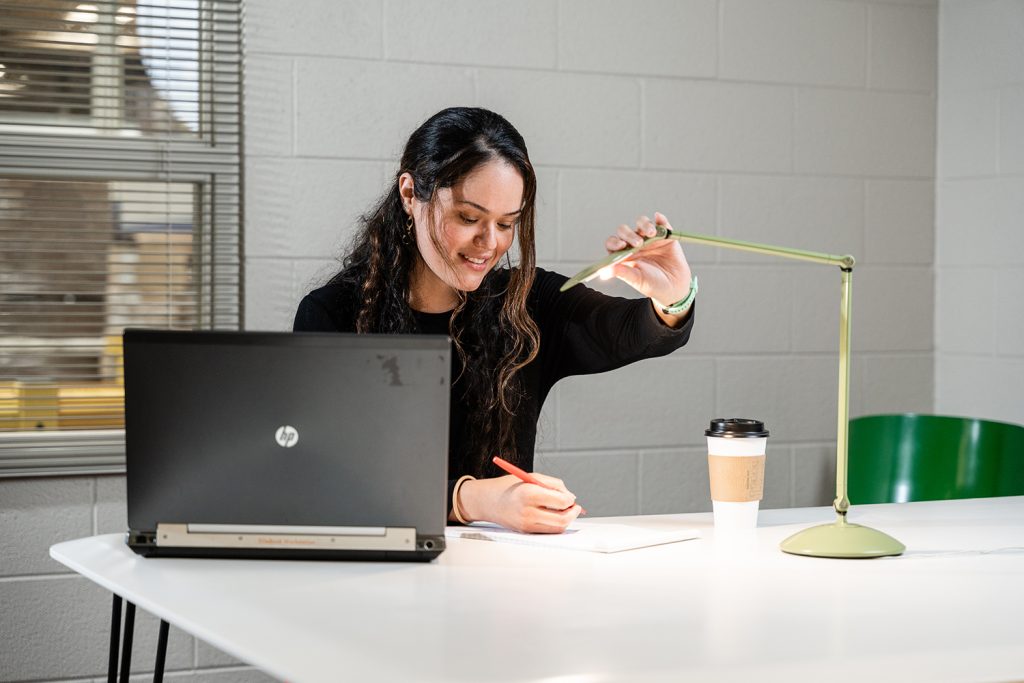
As we’ve covered, effective office lighting isn’t one-size-fits-all. We recommend pairing ambient light from overhead fixtures with focused personal task lighting at each workstation. Adjustable task lights let each person control brightness and direction, reduce glare, and meet each occupant’s unique needs. By adding task lighting to the plan, you can keep overall ambient levels lower, creating a visually comfortable environment while saving energy and reducing maintenance.
Prioritize adjustability
Specifying task light fixtures that offer adjustability is essential for comfort. Features like movable arms and dimmable controls allow users to position the light exactly where they need it and adjust brightness to suit their eyes and their work. This personal control helps everyone, with their unique illumination needs, find their own comfort zone.
Placement matters
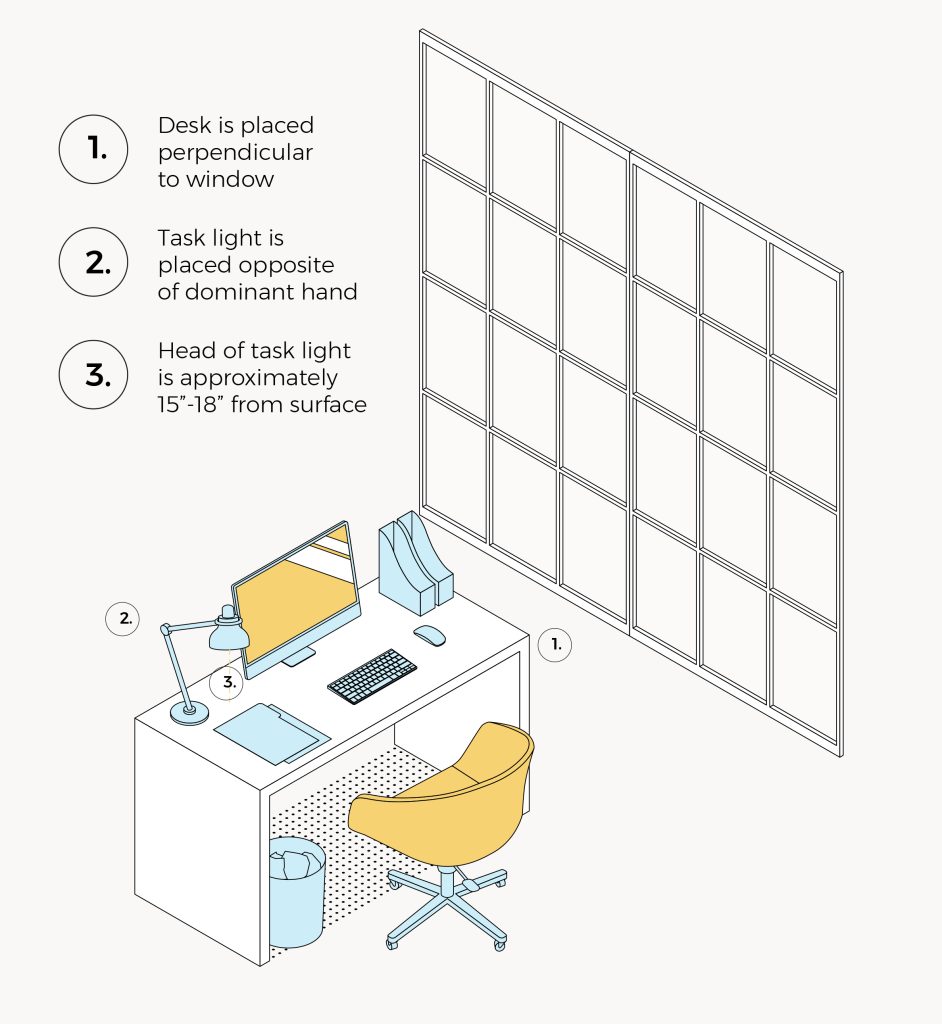
Got a lamp on the desk? Good! Now level up its impact on comfort with these ergonomic placement hacks:
- Arrange desks perpendicular to any windows to minimize glare on displays/monitors.
- Place task lights opposite the user’s dominant hand to prevent shadows from interfering when writing.
- Position the task light head about 15–18 inches above the desk surface. This ideal distance provides focused illumination without causing glare or discomfort.
Balance over brightness
The goal shouldn’t be to flood the space with light, but to create an environment where light is evenly distributed and easy to control. Balanced lighting, free of harsh contrasts, helps reduce eye strain and glare, making it easier to focus for longer periods without discomfort. With personal task lights complementing the lighting plan, it’s acceptable to lower the overall ambient level of overhead fixtures. It’s a win-win for users and the company’s bottom line.
Start Simple, Build with Intention
Good lighting doesn’t have to be complicated. It does require clarity and a bit of planning. Taking the time to get it right early helps protect the initial design integrity and avoid costly post-move-in adjustments.
If you’re not sure where to start, you don’t have to figure it out alone. At LightCorp, we’ve spent decades helping designers and organizations think more clearly about how lighting supports the work we do. That experience has taught us one thing: good lighting is never about trends or quick fixes, but about understanding people, their unique needs, and how they use a space. If you need more recommendations for your project, get in touch with our experts at insidesales@lightcorp.com. They can help you create environments that work as well as they look.