
Commercial interior designers and dealers often focus on spatial flow and furniture placement during initial layout planning. However, even the most striking interior design relies on good lighting to make the space visually appealing and functional. If the lighting leaves shadows across a workstation or causes harsh reflections on computer screens, the layout fails the client.
When lighting is treated as an afterthought during the planning phase, designers can face costly post-occupancy fixes. At the same time, occupants can lose focus due to bad glare and slow down their productivity. By planning workstation lighting around the reality of the workday, designers can protect office construction timelines and the client's bottom line.
Workstations Host Multiple Roles, Not Just One Task
The standard nine-to-five desk has evolved into a fluid environment. Within a single layout, a hot-desking station might host multiple employees with different work needs over the course of a week. This means workstation lighting must adapt to varying job descriptions and different vision preferences.
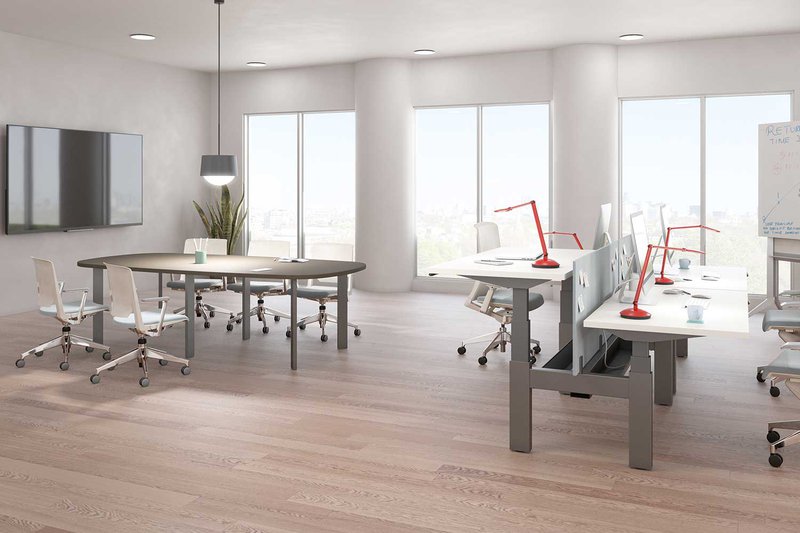
When planning for these shared, multi-user work environments, designers and dealers must consider how the lighting plan adapts to changing user needs. Aligning the fixtures with the demands of the physical workspace ensures that the design is functional long after the client moves in:
- Account for constant shifts between glare-prone mobile devices and computer screens as well as paper documents. Try to utilize fixtures with dimming capability to balance screen brightness.
- Eliminate dark shadows created by bulky dual-monitor desks. Specify flexible designs with multi-position articulating arms that can reach over high equipment.
- Ensure illumination levels can be controlled by individual users as they move between independent focus work and collaborative huddles. Select lamps with intuitive, responsive touch interfaces.
Lighting the Full Office Day From Morning to Sundown
As the sun moves across the sky over an eight-hour shift, the angle and quality of light entering an office building change constantly. This continuous shift causes uneven indoor light levels, throwing direct reflections across computer screens in the morning and leaving deep shadows by afternoon.
Because of these environmental changes, workspaces require adaptable illumination to maintain consistent visibility. Reliance on unyielding overhead fixtures alone cannot solve this issue; instead, it forces eyes to constantly strain against the changing ambient light. Ultimately, when designers prioritize building workspaces that support how people really work, they ensure that the layout responds directly to these changing work environments.
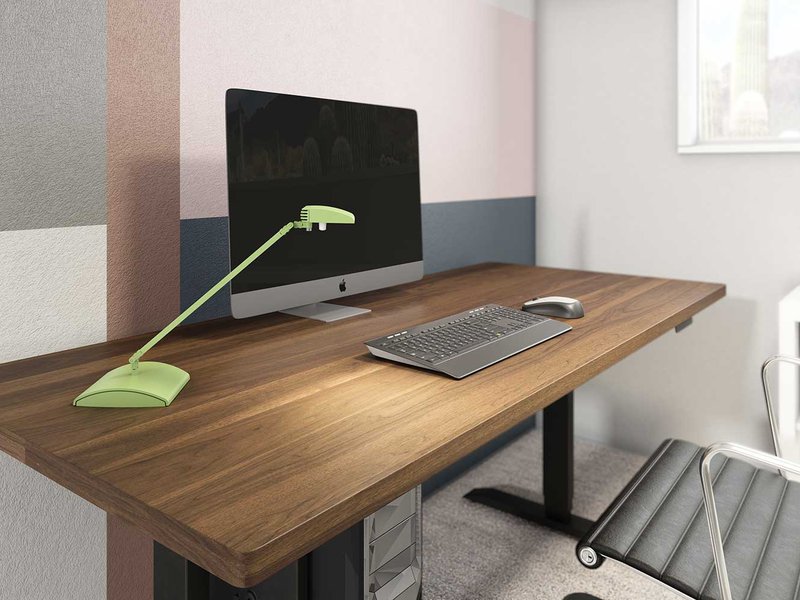
Integrating high-performance workstation lighting enables individual users to adjust their desks to match changing daylight levels and work modes throughout the day. To help maintain the end user’s momentum from morning to evening, specifiers should select fixtures that accommodate these shifting daily phases.
Morning
As the workday begins, low-angle sunlight streams horizontally through the windows. This causes direct reflections on computer screens and uneven lighting across desktops. To balance these changing conditions, workers will need lights with dimming features. Choosing a cool color temperature early in the day mimics early morning sunlight. This helps suppress drowsiness and boosts alertness as the team tackles morning tasks.
Noon
By the middle of the workday, ambient light reaches its peak intensity. This fills the entire workspace with uniform, bright light. At this point, high-overhead fixtures combined with intense natural light can wash out computer screens, making them uncomfortable to look at. Localized control allows users to dial back desk lighting intensity to eliminate washout and balance comfort and visibility.
Afternoon
As the sun dips, ambient light levels drop. Long shadows stretch across the office layout. This shift is when visual fatigue and the afternoon slump typically hit. To combat this, workers will need workstation lighting they can adjust physically, such as task lights with multi-position articulating arms enable them to pull light exactly where it’s needed to clear late-day shadows and re-engage focus.
Evening
Once the sun begins to set, natural daylight fades completely, leaving the workspace dependent on artificial workstation lighting. By this time, the lighting should transition to a lower intensity and a warmer color temperature. This maintains comfortable late-day focus without straining the eyes or disrupting the occupants' natural biological clocks.
Build a Brighter, More Efficient Workspace with LightCorp
Planning office lighting around daily workflows ensures long-term project design success. LightCorp supports commercial designers and dealers with top-tier workstation lighting and power. Backed by a reliable standard 10-day lead time, our solutions blend thoughtful performance with the flexibility that today’s workplaces demand. Contact LightCorp today for more efficient office lighting solutions.