
Poor lighting does more than affect how a room looks. It can cause eye strain, fatigue, and headaches, all of which chip away at focus over the course of a workday. With most office work now done on screens, lighting has a greater influence on comfort and performance than it used to.
That's why it deserves more than an afterthought in the design process. The right lighting supports how people work. Meanwhile, the wrong lighting can undercut even a well-planned layout.
Here's where ergonomic lighting fits into a workspace, what it does for the people using it, and what to look for when specifying it.
Benefits of Ergonomic Lighting for Office Environments
Good ergonomic lighting for office spaces can solve problems before anyone has to think about them: no squinting, no glare on a monitor, and no dim corner that gets skipped over. That's the standard it's built to meet. Here's what good lighting delivers:
- Reduces eye strain. Task-appropriate lighting reduces the squinting and screen glare that build up over the workday.
- Supports better focus. Even, well-placed light reduces the flicker and glare that pull attention away from a screen or document.
- Cuts fatigue and headaches. Harsh or insufficient lighting is a common trigger for both. Proper fixture placement helps reduce visual discomfort and create a more comfortable workspace.
- Adapts to different tasks. Desk lighting supports focused, individual work. Under-shelf and accent lighting serve shared spaces like huddle rooms or breakout areas, where lighting needs differ.
- Improves the overall feel of a space. Good lighting helps create a workspace that feels complete and comfortable.
- Lowers long-term costs. Reliable fixtures mean fewer replacements and service calls over time, freeing up budget that can go elsewhere in the project.
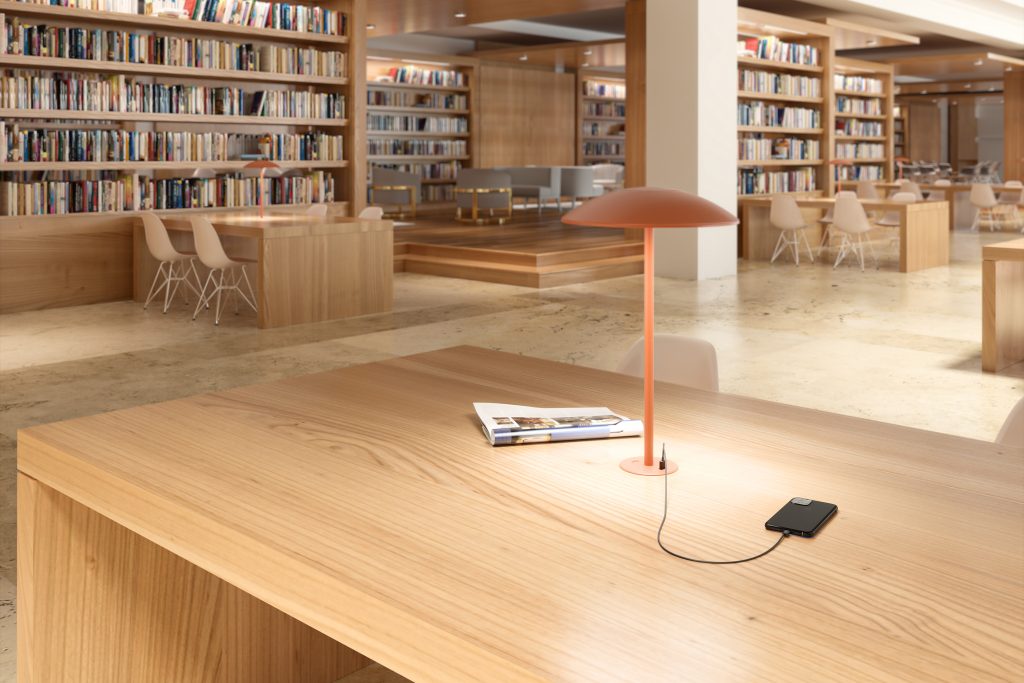
Each of these benefits gives designers a stronger case for factoring office lighting design decisions into the plan early rather than treating them as a finishing touch.
Where Ergonomic Lighting Fits in a Workspace Plan
Ergonomic lighting for office spaces isn't limited to one type of fixture. It shows up across every zone of a floor plan, from individual desks to shared areas, and each zone has its own lighting demands. Take a floor plan with rows of desks, a shared supply wall, and a breakout area: each of those needs a different approach to work well.
- Individual workstations. Planning workstation lighting needs starts with desk lighting for focused, task-heavy work. It puts direct light exactly where someone needs it, without straining their eyes.
- Shared surfaces and storage areas. Under-shelf lighting extends that same support to these zones. It keeps work areas lit without adding clutter or extra fixtures.
- Collaborative spaces. Pendant and accent lighting are suited for huddle rooms, breakout areas, and other spaces where people move between focused and group work. These fixtures soften the room instead of lighting it like a workstation.
Planning by zone helps ensure every part of the floor plan is supported by the right lighting.
What to Look for in Ergonomic Lighting
Not all fixtures qualify as ergonomic lighting for office areas. Some are built for basic illumination without considering how people use the space. The right fixtures should support a range of tasks, layouts, and end-user needs.
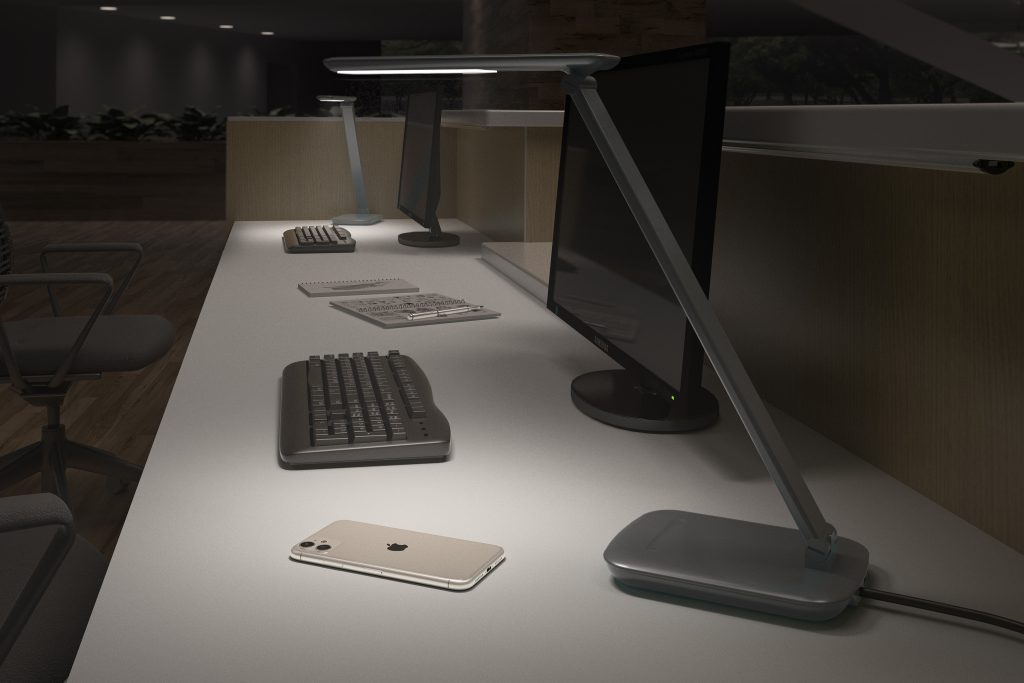
- Adjustability. Look for fixtures that let users control brightness or direction. Fixed lighting can't adapt to different tasks or people.
- Glare control. Good fixtures direct light where it's needed and away from screens. This cuts eye strain before it starts, and a recent workplace vision study found that most employees dealing with digital eye strain say it negatively impacts their output.
- Placement flexibility. Desk, under-shelf, and pendant options should fit the layout, not force the layout to fit them.
- Proven reliability. Fixtures should hold up under daily use without frequent replacement or service calls.
- Finish options. Fixtures should match the rest of the space, not stand out for the wrong reasons. A cohesive look supports the overall design.
Getting these factors right helps prevent lighting issues after installation and creates a better experience for everyone using the space.
Choose Quality Lighting for Workspaces
Ergonomic lighting is not an accessory. It's a core part of how a workspace performs, day after day. At LightCorp, we design desk, under-shelf, and pendant lighting built to support focus and comfort in every zone of an office, backed by a 10-day lead time that keeps projects on schedule without sacrificing fit or quality.
That's what ergonomic lighting for office spaces should do: work as hard as the people using it. Partner with us to get it right.