
Workspaces are changing as flexibility becomes a priority among companies. New office builds and remodels increasingly opt for collaborative zones, quiet focus areas, and mixed-use spaces instead of open floor plans with assigned desks. As these environments evolve, one-size-fits-all overhead lighting fixtures can no longer support the diverse needs of workers sharing the same space.
Choosing adaptable workspace lighting can resolve this challenge. This article outlines several strategies to design lighting that easily accommodates agile teams.
The Layout Dilemma: Why Static Fixtures Can't Keep Up with Agile Offices
Traditional office lighting was originally designed for industrial efficiency. Because of this, companies for decades have opted for uniform overhead fixtures because they were cheap to buy and simple to install. However, employees now often switch between reading printed materials, working on screens, and collaborating with coworkers throughout the day.
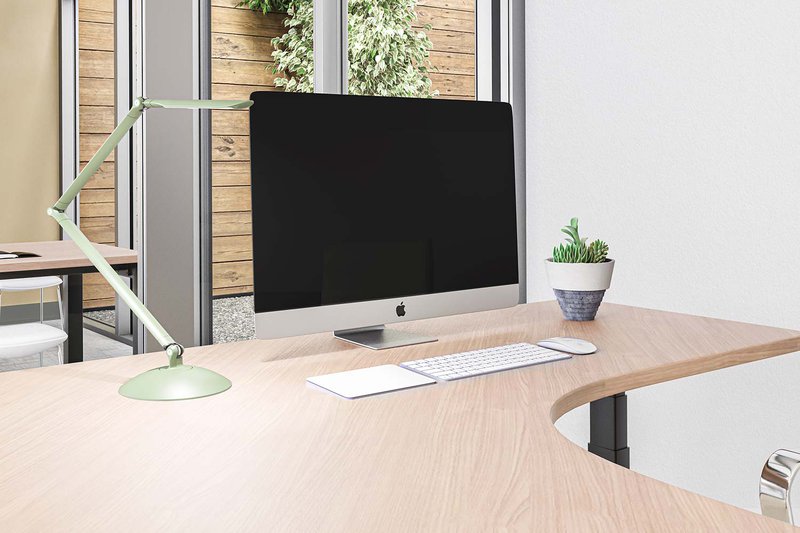
Traditional ceiling fixtures are not always well suited for flexible office layouts. When furniture arrangements are modified without adjusting the lighting plan, issues like the following can occur:
- Shadows on work areas. Moving a desk away from the original ceiling layout can block overhead light, casting deep shadows over desks and screens. Cornell University ergonomics research shows that these shadows and glare contribute directly to daily eye strain, physical fatigue, and reduced task performance.
- Uniform light levels for different tasks. Ceiling-based lighting fixtures distribute the exact same brightness everywhere. An American Society of Interior Designers survey reveals that up to 68% of office workers are unhappy with their desk lighting, primarily because overhead lighting cannot balance screen glare with the brighter focus light needed for reading physical documents.
- Disconnection from natural daylight. Static ceiling grids treat every part of the room the same, regardless of where windows are located. This leaves desks near windows with uncomfortable glare, while desks deeper in the room remain dim and uninviting.
Choosing adaptable workspace lighting helps solve these common office issues. When lighting is designed to support employees, workspaces can change and evolve without physical limitations.
Designing for Adaptability: Workspace Lighting Strategies
Designing a flexible office requires shifting the focus from uniformly illuminating an entire room to providing high-performance workspace lighting that adjusts depending on a user’s needs. Adopting the following localized strategies ensures the lighting layout is just as agile as the rest of the workspace:
Defining Casual and Collaborative Zones with Lighting
Workspace lighting can do more than just provide basic illumination; it can be a powerful tool for defining spaces within an office. As flexible offices tend to have fewer physical walls, lighting can act as a subtle, visual boundary. By playing with different color temperatures and using different light intensities, designers can naturally guide employee behavior without relying on rigid dividers:
- Create visual focal points. Position statement lamps or clustered fixtures directly over collaborative hubs. This draws the eye and naturally invites people to gather in designated meeting spots rather than focus zones.
- Match brightness and temperature to the zone's purpose. Hang warm, soft pendant lights over casual seating areas to encourage open conversation and relaxation. For active collaboration tables, use clear, focused light to keep energy levels high and mitigate eye strain when looking at shared screens.
- Use varying light intensities to balance glare and aesthetics. Keep ambient overhead fixtures soft to establish a comfortable mood. To ensure work surfaces remain functional, layer those stylish pieces with adjustable task lights that keep screens glare-free during collaborative work.
Specifying Desk-Mounted Workspace Lighting
When work surface area runs short, desk lamps can often take up desk real estate and can make work surfaces look cluttered. At a time when height-adjustable desks and modular furniture are becoming a staple in modern offices, these bulky fixtures can also limit physical movement and pose safety hazards when desks transition from sitting to standing heights. Specifying desk-mounted workspace lighting solves these challenges by integrating modern office lighting designed for visual comfort directly into the furniture. Designers can implement desk-mounted lighting with the following strategies:
- Integrate fixtures directly into the desk's work surface. Select lighting units that clamp directly to desk edges or insert into built-in grommet holes. This secures the light source, frees up valuable desktop real estate, and ensures the fixture moves safely with the furniture.
- Opt for highly adjustable arms and directional heads. Choose fixtures with articulated, multi-axis joints that allow users to position the light precisely where they need it. This flexibility allows employees to direct light onto physical documents and completely away from computer screens to eliminate reflection.
- Use cord managers for cleaner wire routing. Consider using self-adhesive cord clips to secure power cables directly along desk legs and underside frames. Keeping cords organized and out of sight visually tidies the workstation while preventing cables from pinching, stretching, or snagging as height-adjustable desks move up and down.
Integrating Desk-Level Sensors for Dynamic Occupancy
As hybrid work schedules become more common, many offices are no longer occupied at full capacity throughout the day. However, traditional buildings continue to waste considerable amounts of energy by keeping empty zones and unoccupied desks fully lit all day.
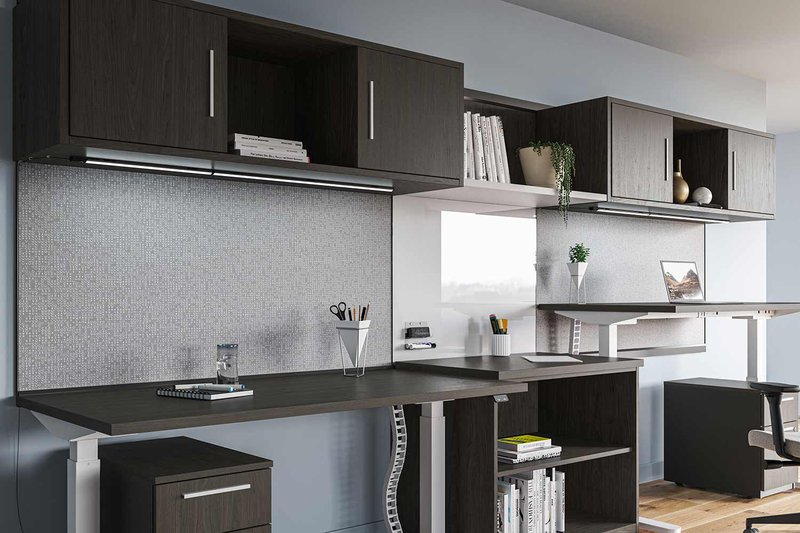
Integrating desk-level sensors solves this inefficiency by shifting control from rigid, building-wide schedules to real-time, localized activity. This smart technology allows companies to seamlessly transition to task lighting for hybrid environments, helping workspace lighting adapt to how employees actually use the office throughout the day. Designers and facility managers can approach sensor integration with the following strategies:
- Specify built-in occupancy sensors. Select personal task lights with built-in sensors that detect when a workstation is in use. These sensors automatically turn lights off after a period of inactivity, helping reduce energy waste without requiring employees to remember to switch them off.
- Incorporate fixtures with built-in auto-off capabilities: Select task lights equipped with automated shut-off timers that trigger after 10 to 12 hours of operation. This provides an extra layer of energy conservation and ensures lights do not remain powered overnight or over the weekend if an employee forgets to turn them off before leaving.
Explore Flexible Lighting Solutions
Static ceiling fixtures can no longer support the dynamic layouts and shifting task needs of an agile workspace. At Lightcorp, we design high-performance lighting solutions, including adjustable desk-mounted fixtures and smart occupancy sensors, that seamlessly move and scale alongside teams. We help companies eliminate physical constraints, lower energy waste, and prioritize visual comfort.
Partner with us today to build a flexible, future-proof workspace that supports employees every hour of the workday.